
Why Motorcyclists Choose Bhutan

You come for the road. You stay for the rhythm.
Riding a motorcycle in Bhutan begins in silence. Not the absence of sound, but the presence of something rarer: mountain air so clean it seems animated, landscapes vast enough to absorb the pulse of an engine, and roads quiet enough to encourage reflection as much as motion.
Before the first switchback, most riders sense that they have entered a place governed by a different set of assumptions. Bhutan does not stage adventure or manufacture thrill. It does not need to. The country offers something less performative and more enduring, an experience shaped by Buddhist values, cultural continuity, and a careful respect for land and life.
Many riders arrive expecting little more than a beautiful route. What they encounter instead is perspective. Time slows. Attention sharpens. Space opens. Ancient monasteries cling to cliffsides, prayer flags span mountain passes, and a living culture invites riders to move deliberately, to notice, and to travel with intention.
The Road That Rewrites Distance
Motorcycle touring in Bhutan is not confined to a single iconic highway. It unfolds across the country itself. Our journeys are designed to move from one end of Bhutan to the other, linking valleys, high passes, and remote regions rarely seen by visitors.
The most expansive of these journeys, the Tour of the Dragon Road ride, covers more than 1,500 kilometres and stands among the most comprehensive motorcycle routes in the Himalayas. The ride descends to roughly 250 metres near the Indian border, where the air turns warm and subtropical, then climbs steadily through river gorges, dense forests, and isolated valleys to motorable passes approaching 4,000 metres.
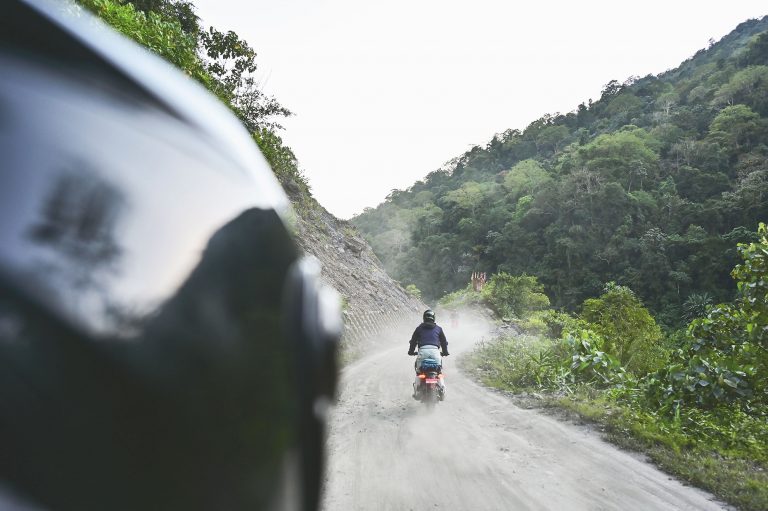
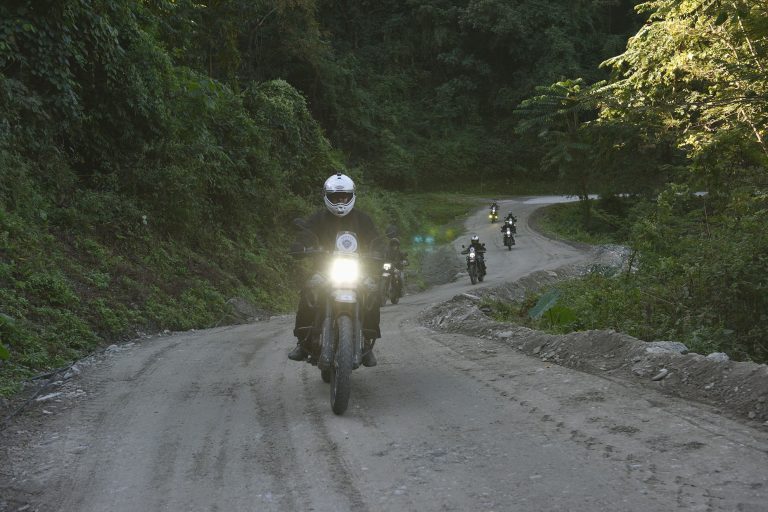
Between these extremes lies an astonishing range of experience. Altitude shifts give way to changes in climate, culture, and road character. Riders encounter wide, two-lane mountain highways with almost no traffic, long, flowing bends that follow the contours of valleys, and newly built roads carved directly from cliff faces, opening access to regions that until recently were unreachable.
Shorter motorcycle tours trace key regions of Bhutan and condense this immersion into fewer days. The distances may be shorter, but the effect is no less absorbing. Empty roads, dramatic elevation changes, unhurried travel, and meaningful cultural encounters define every ride.
Here, time behaves differently. Distances feel compressed even as days feel full. Progress is measured less in kilometres than in awareness.


Riding Through Living Culture
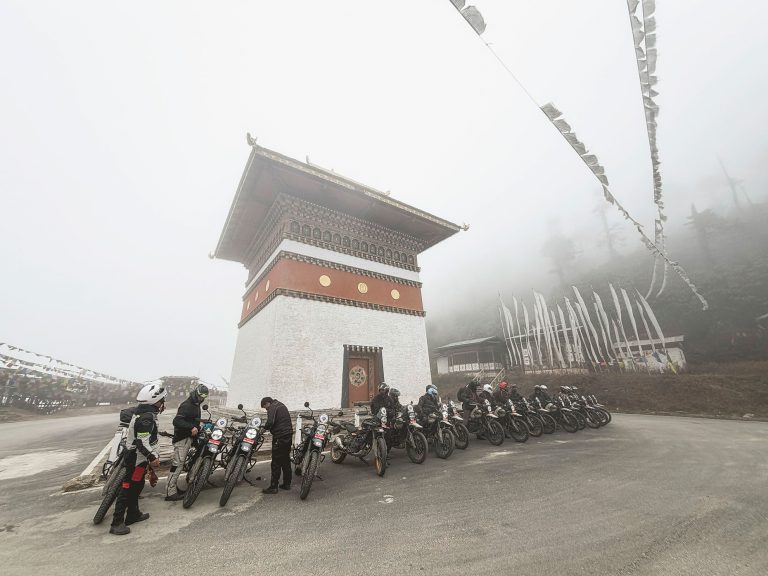
In Bhutan, culture is not preserved behind museum glass. It appears directly on the road. Riders pass hillside monasteries, spinning prayer wheels at village entrances, and roadside stupas where travellers pause, almost instinctively, to walk clockwise and offer a moment of respect.
These encounters are not performances arranged for visitors. They are part of daily life.
Buddhist philosophy subtly reshapes the experience of riding. Speed loses its urgency. Aggression feels misplaced. Even road etiquette reflects patience and attentiveness, qualities that gradually migrate from the environment to the rider.
Mountain passes are marked not by signage but by prayer flags strung high in the wind, carrying mantras of compassion and balance across the valleys below. Crossing one feels less like reaching a summit than stepping into a new frame of mind.


The Space Between Miles
For riders unfamiliar with Himalayan conditions, reassurance comes from people rather than luxury, and this is where our team makes the difference.
Our guides bring decades of experience leading journeys across Bhutan, many having transitioned naturally from vehicle-based tours to motorcycle expeditions. Their knowledge is both technical and intimate. They do more than lead the road ahead; they interpret it, sharing the cultural, spiritual, and historical layers that give Bhutan its depth, from remote farming communities to ancient dzongs and sacred monasteries. The result is not simply a route completed, but a place understood.
Each journey is supported by dedicated mechanics who ride alongside the group on their own motorbikes, ready to respond immediately as situations arise. Every evening, the motorcycles are serviced, cleaned, and refuelled, ensuring that each riding day begins with quiet confidence. This care reflects not only professionalism but pride, in the machines, the journey, and the country itself.
The service offered by the team mirrors the passion they hold for motorcycling and for Bhutan.
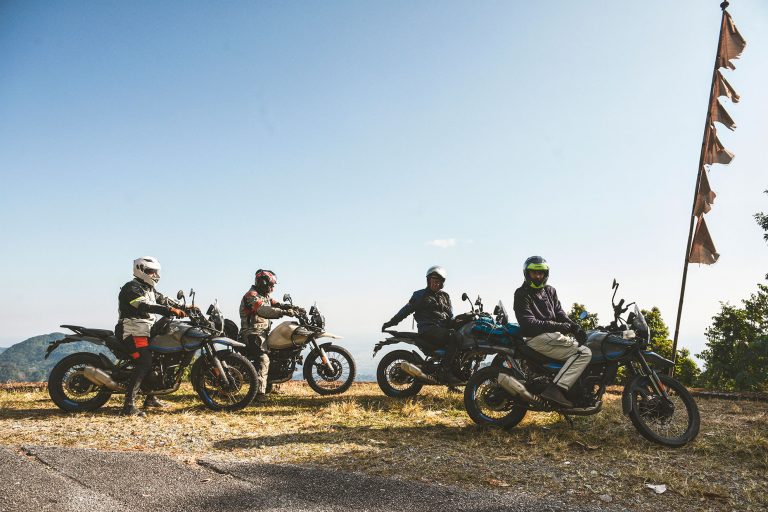
The motorcycle chosen for these journeys is the Royal Enfield Himalayan 450, a machine that seems almost designed for this terrain. Light, balanced, and remarkably capable, it handles Bhutan’s varied conditions with ease, from flowing highways and high passes to rougher sections and newly cut roads.
The bike rewards smooth, attentive riding rather than force. It invites engagement without exhaustion, making it well suited to riders who value connection over conquest.
Over time, a quiet alignment forms. Rider and machine settle into the road, and the road, in turn, settles into Bhutan itself. Together, they reveal a landscape uniquely hospitable to two wheels.
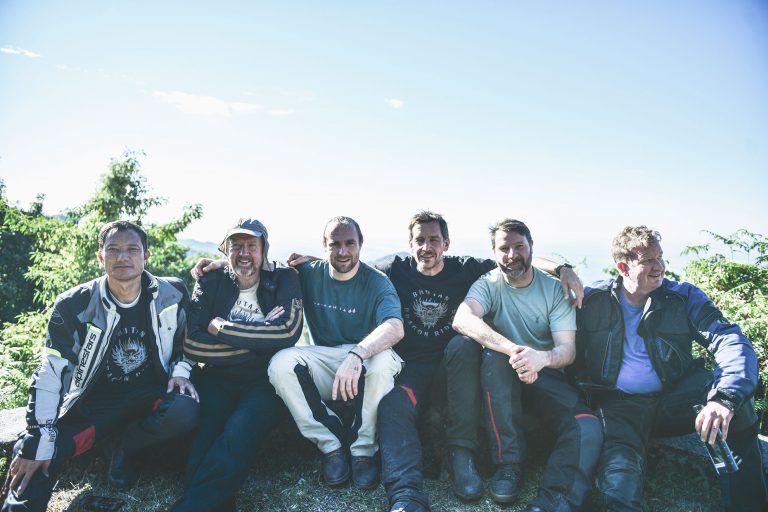
Evenings arrive early in Bhutan. Engines cool. Headlamps go dark. Boots are unlaced. Riders gather over shared meals, near wood stoves, or around a map spread across a table, while valleys fade into night beyond the windows.
Stories emerge, not of speed or bravado, but of moments: a clearing in the clouds, the echo of a monastery bell across a valley, a stretch of road that felt almost meditative.
What riders struggle to articulate is scale. How a country so small can feel so expansive, not in size, but in meaning.
Bhutan leaves room for quiet. On the road. In the mountains. In the mind. For riders seeking more than an exceptional route, that space becomes the greatest reward of all.
It is, quite simply, a motorcyclist’s paradise within a paradise.