
Bhutan had no roads until the 1960s

In Bhutan, every road tells a story, and every ride becomes part of its history.
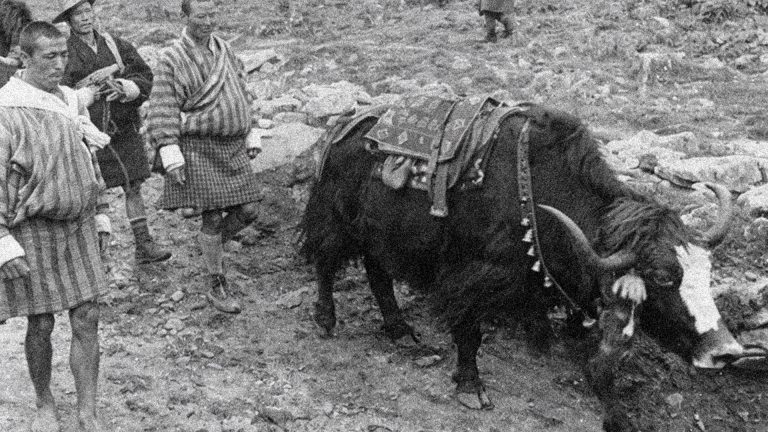
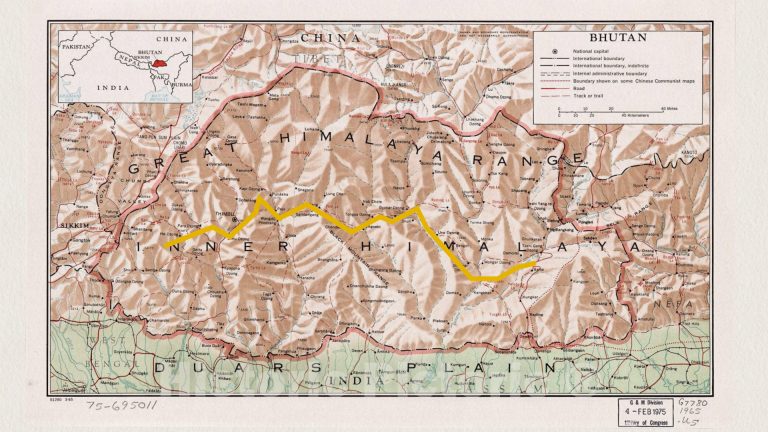
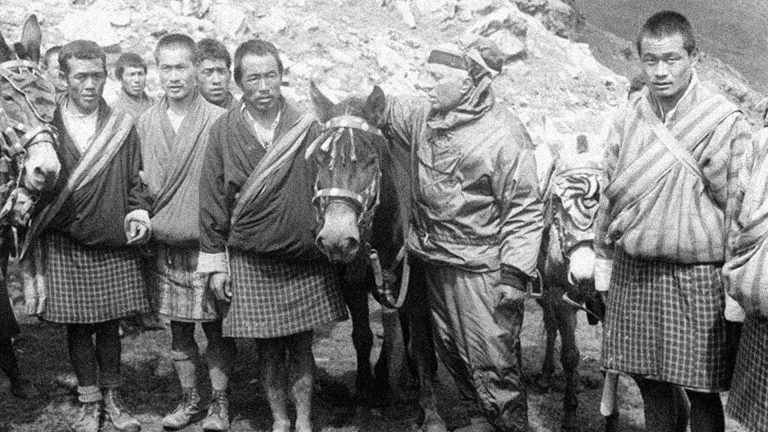
Before the arrival of motor vehicles, Bhutan relied entirely on footpaths and animal trails for transportation. For centuries, this remote Himalayan kingdom had no modern roads, and the only way to travel was on foot or by pack animal. The country’s principal route was the Trans Bhutan Trail, an ancient 403-kilometre pathway that crossed the kingdom from Haa in the west to Trashigang in the east. For hundreds of years, it served as Bhutan’s main artery, connecting villages, dzongs (fortresses), monasteries, and trading centres through some of the world’s most rugged mountain terrain.
The trail was far more than a simple footpath—it was the backbone of Bhutanese society. It linked communities that would otherwise have remained isolated, enabling the movement of people, goods, ideas, and culture across the kingdom. Kings travelled the route to visit distant regions, government officials carried royal decrees between districts, Buddhist monks journeyed to sacred monasteries, traders transported salt, wool, rice, tea, and other essential goods, while pilgrims followed the trail to some of Bhutan’s most revered temples and shrines.
Without roads, everything had to be carried by horses, mules, yaks, or human porters. Travellers crossed steep mountain passes, dense forests, suspension bridges, and narrow cliffside paths, often facing harsh weather, swollen rivers, and heavy snowfall. A journey between valleys that today takes only a few hours by motorcycle could once require several days—or even weeks—on foot.
Beyond its practical importance, the Trans Bhutan Trail also played a defining role in shaping Bhutan’s national identity. More than a transportation route, it was a corridor of cultural exchange, linking isolated communities and allowing traditions, religious teachings, craftsmanship, and trade to flourish throughout the kingdom. Along the way, travellers crossed centuries-old cantilever bridges, turned prayer wheels, passed chortens and monasteries, and found shelter in simple rest houses built to support those undertaking long and often arduous journeys. For generations of Bhutanese, the trail represented not only a means of travel but also a shared connection to the country’s history, culture, and spiritual heritage.
The Trans Bhutan Trail remained Bhutan’s principal transportation route until the 1960s, when the country embarked on its first programme of modern road construction under the visionary leadership of the Third King, His Majesty Jigme Dorji Wangchuck. As highways gradually replaced ancient footpaths, a new era of mobility began. It was only with the arrival of these roads that motorcycles could make their first appearance in Bhutan, forever transforming the way people travelled through the Kingdom of the Thunder Dragon.
Although many sections of the Trans Bhutan Trail have now been restored as a cultural and hiking route, its legacy lives on. Many of Bhutan’s modern highways follow the same valleys and mountain passes once travelled by monks, traders, and royal messengers. Today, motorcyclists riding these roads are, in many ways, following the footsteps of generations who first forged the paths through the Himalayas.
The First Roads and the Arrival of Motorcycles
The story of motorcycling in Bhutan is closely tied to the country’s remarkable journey towards modernization. Until the early 1960s, Bhutan remained one of the world’s most isolated nations, with travel still dependent on ancient footpaths and mountain trails. This changed during the reign of His Majesty the Third King, Jigme Dorji Wangchuck (1952–1972), whose vision for a modern Bhutan led to sweeping reforms in infrastructure, education, healthcare, and governance.
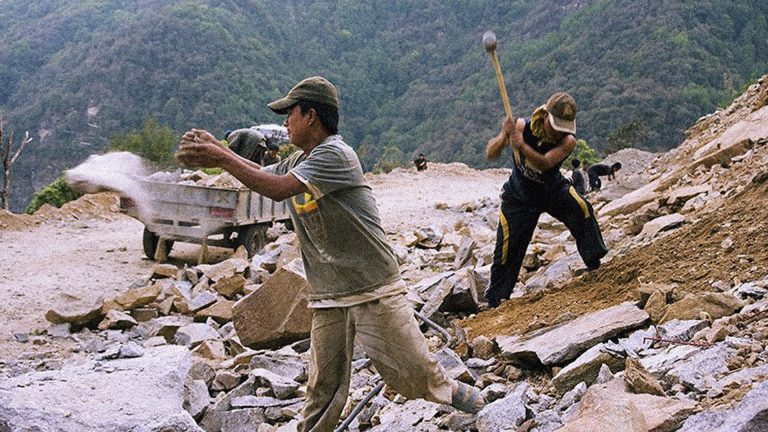
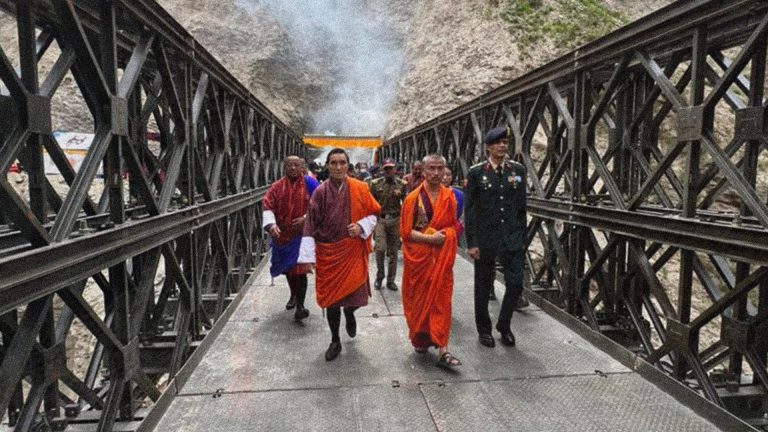
A turning point came in 1961, when Bhutan launched its First Five-Year Plan, marking the beginning of the country’s modern road network. With the support of the Government of India through Project DANTAK, engineers undertook the extraordinary task of carving roads into the steep Himalayan mountainsides. The first major highway connected the border town of Phuentsholing with the capital, Thimphu, providing Bhutan with its first permanent road link to the outside world. For the first time, medicine, food, construction materials, and essential supplies could be transported by vehicle rather than on foot or by pack animal, dramatically improving the lives of people across the kingdom.
Road construction continued steadily over the following decades. New bridges spanned deep river valleys, roads reached increasingly remote districts, and work began on what would become the East–West Highway, the backbone of Bhutan’s transport network. By the early 1970s, the country had developed more than 1,500 kilometres of roads, opening vast areas that had once been accessible only by the ancient Trans Bhutan Trail.
As the road network expanded, Bhutan welcomed its first motor vehicles, including trucks, jeeps, buses, and, by the early 1970s, its first motorcycles, most of them imported from neighbouring India. Lightweight, economical, and well suited to Bhutan’s winding mountain roads, motorcycles quickly proved to be a practical means of transport.
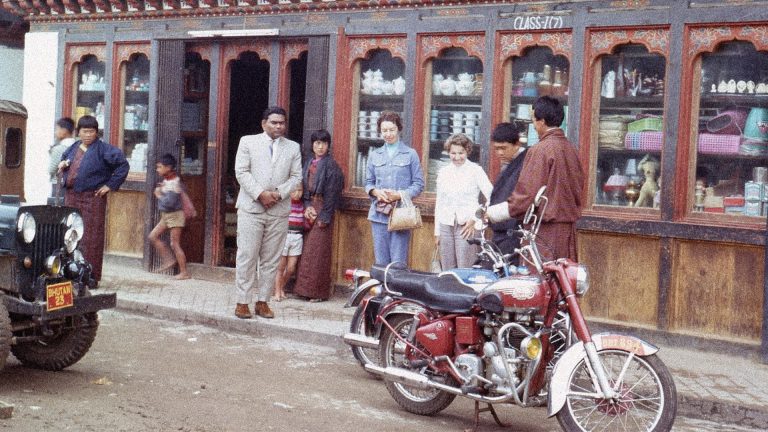
In those early years, however, motorcycles remained a rarity. They were ridden mainly by government officials, engineers involved in road construction, traders travelling between towns, and a handful of adventurous young Bhutanese. The sight and sound of a motorcycle passing through a village often drew curious crowds, symbolising the arrival of a new era. Although few in number, these pioneering machines marked the beginning of Bhutan’s motorcycling story and laid the foundation for the thriving riding culture that would emerge in the decades to follow.
Modern Roads in Bhutan
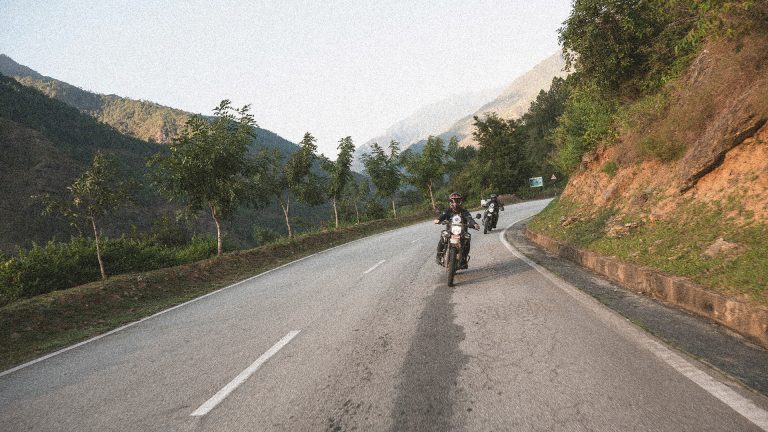
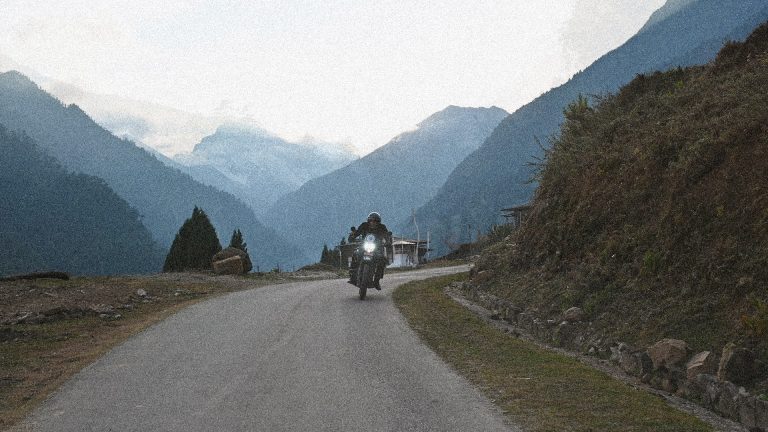
Today, Bhutan has a road network extending over thousands of kilometres, connecting every district and reaching many remote communities that were once accessible only on foot. From the winding East–West Highway to mountain passes exceeding 3,000 metres, the country’s roads are engineering achievements that traverse some of the most challenging terrain in the Himalayas.
Yet, despite this remarkable transformation, many of Bhutan’s modern highways still follow the natural corridors and mountain passes that formed part of the ancient Trans Bhutan Trail. In many places, today’s motorcyclists are travelling the same valleys and ridgelines once crossed by monks, traders, pilgrims, and royal messengers centuries ago. Bhutan’s roads are therefore more than transportation routes—they are living links between the country’s past and present, telling the remarkable story of a nation that transformed from isolated mountain kingdom to modern state in just a few decades, while preserving its unique cultural and spiritual heritage.
What truly sets Bhutan apart is the extraordinary combination of flawless mountain roads and almost non-existent traffic. The smooth tarmac winds effortlessly through forests, valleys, and high mountain passes, often allowing riders to enjoy kilometre after kilometre without seeing another vehicle. Add the breathtaking scenery and Bhutan’s respectful driving culture, and it becomes one of the world’s most rewarding destinations for motorcyclists.